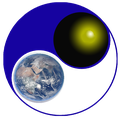
Antithesis "Science"

The first scientists in the eighteenth century sought to explain nature and explore its laws without denying their belief in God. They studied planetary orbits and measured gravity.
In the nineteenth and twentieth centuries, science made such tremendous progress that God and the "supernatural" simply became obsolete.
Medical discoveries about hygiene, pathogens, and medicines, countless technological achievements and inventions, and a new mechanized agriculture and technology in the home and transportation made our modern lives, with all their conveniences and comforts, possible.
From the perspective of an eighteenth-century citizen, every individual in the Western world today has access to immense wealth and luxury. Almost everyone can afford a two-week flight to the Dominican Republic for a beach vacation without having to consider the resources required.
But this science and its applied technology have also brought us all the problems we are struggling with today: climate change, overpopulation, the finite nature of resources and raw materials, social upheaval, fear of downward mobility and insecurity, migration and refugee flows, and much more.
Science at its limit?
That's a heretical idea, but science ends where scientific criteria end. What are the scientific criteria?
- Experiments must be repeatable.
- The properties of the objects must be measurable.
- The accuracy of the measurements must be extremely high (there are specific standards for this); chance and measurement errors must be ruled out.
- Computer model calculations must be verifiable through measurements.
But now we are faced with the fact that in physics the limits of measurement accuracy have already been reached since Heisenberg's uncertainty principle, matter can no longer be grasped below the smallest particles, and in cosmology it has been established that the known matter and energy in the universe comprises just 5% to a maximum of 15%. The rest is dark energy and dark matter, which we know absolutely nothing about and which defies measurement.
Has science become unethical?
Is capitalism to blame?
Capitalism began with the promise of increasing prosperity. If the rich are rich enough, there will be enough left for the poor, some liberal thinkers reasoned toward the end of the twentieth century. This was well-intentioned, but good intentions often have the opposite effect.
Thus, fewer and fewer people became richer and richer, and the gap between rich and poor widened.
This cannot be good.
But without capitalism, we would all have far less. In communism, everyone had nothing except the party leadership, and they had the soldiers to keep the people quiet. That cannot be a solution either.
A solution that is good for all people must take into account that human beings are not just matter. Only when a balance is found between materialism and spirituality will there be a solution.